Asbestos insulation — pipe lagging, loose fill and insulating board — represents the most dangerous category of asbestos-containing material. Only a fully HSE-licensed contractor can legally remove it. Our team operates under the strictest protocols.
Asbestos was the construction industry's preferred insulation material for decades — used in pipe lagging wrapped around hot water pipes and boiler systems, loose-fill poured into ceiling voids and wall cavities, rigid insulating boards fixed as firebreaks and wall linings, and sprayed coatings applied to structural steelwork and roof spaces. It was prized for its fire resistance, thermal properties and affordability. By the time its use was banned in 1999, it had been installed in an enormous proportion of the UK's residential, commercial and industrial building stock.
All types of asbestos insulation can release harmful fibres into the air when disturbed — and the threshold for disturbance is lower than most people realise. Even drilling nearby, removing a pipe clip or disturbing ceiling boards can be enough to create a significant exposure risk, increasing the likelihood of asbestosis, lung cancer and mesothelioma. All asbestos insulation must be surveyed and fully assessed before any building, renovation or plumbing work begins in a property where it may be present.
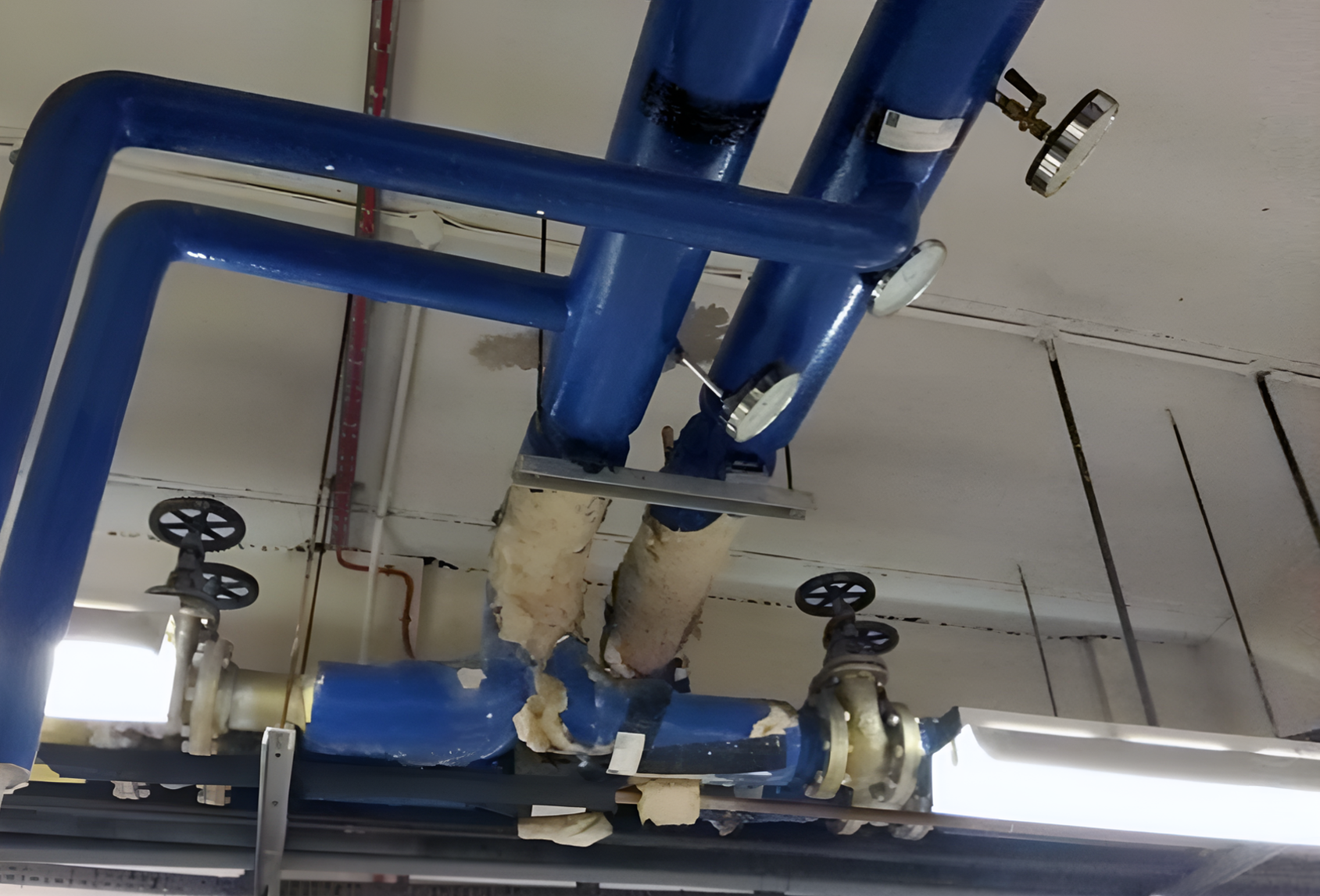
Asbestos wrapped around hot water pipes, boiler systems and central heating pipework. Common in pre-1980 properties. Easily disturbed during plumbing works — even removing a pipe clip can break the lagging and release fibres.
Loose asbestos fibres blown into ceiling voids and wall cavities — particularly common in 1960s–1970s properties. Because the fibres are completely unbound, this type is extremely hazardous if disturbed. Licensed removal with full enclosure is always required.
Semi-rigid boards used as firebreaks, wall linings, ceiling tiles, soffit boards and bath panels. AIB is friable and hazardous — licensed removal is usually required. Commonly found in 1950s–1980s residential and commercial properties.
Spray-applied insulation on structural steelwork and in roof voids. The most hazardous asbestos type — fibres are almost completely unbound. Licensed removal and full sealed enclosure are always required, with continuous air monitoring throughout.
Full risk assessments; sealed enclosures; negative pressure units for high-risk materials; continuous air monitoring throughout the removal process to protect your property and our operatives.
From initial survey and sampling through removal, clearance certification and hazardous waste disposal — every stage is managed by a single contractor, with no handoffs or gaps in responsibility.
All samples analysed by UKAS-accredited laboratories. You receive definitive confirmation of the asbestos type and content, which determines whether licensed or non-licensed removal is required.
We work around your renovation or construction programme. Out-of-hours and weekend availability for commercial projects — so your build programme doesn't have to stop.
How do I know what type of asbestos insulation I have?
A professional survey will identify and assess all insulation materials present in your property. UKAS-accredited sampling then confirms the asbestos type — this is important because the type determines whether licensed or non-licensed removal is required and what safety protocols must be followed.
Is loose-fill asbestos the most dangerous?
Loose-fill and sprayed asbestos coatings are considered the highest-risk insulation types because fibres are completely unbound and can become airborne very easily with minimal disturbance. Licensed removal and full sealed enclosures are always required for these materials.
Can I just leave asbestos insulation in place?
In some cases, intact insulation in inaccessible areas can be safely managed in situ under a formal asbestos management plan. However, if any renovation, plumbing or building work is planned nearby, the material must be removed first. A survey will advise on the best course of action for your specific situation.
How disruptive is insulation removal?
This depends on the type and location of the material. Pipe lagging can often be removed with minimal disruption; loose-fill insulation or sprayed coatings require full sealed enclosures and may take longer to complete. We will give you a clear programme with timescales before any work begins.
Our BOHS-qualified surveyors will identify and assess all insulation types and advise on the safest, most cost-effective removal solution.