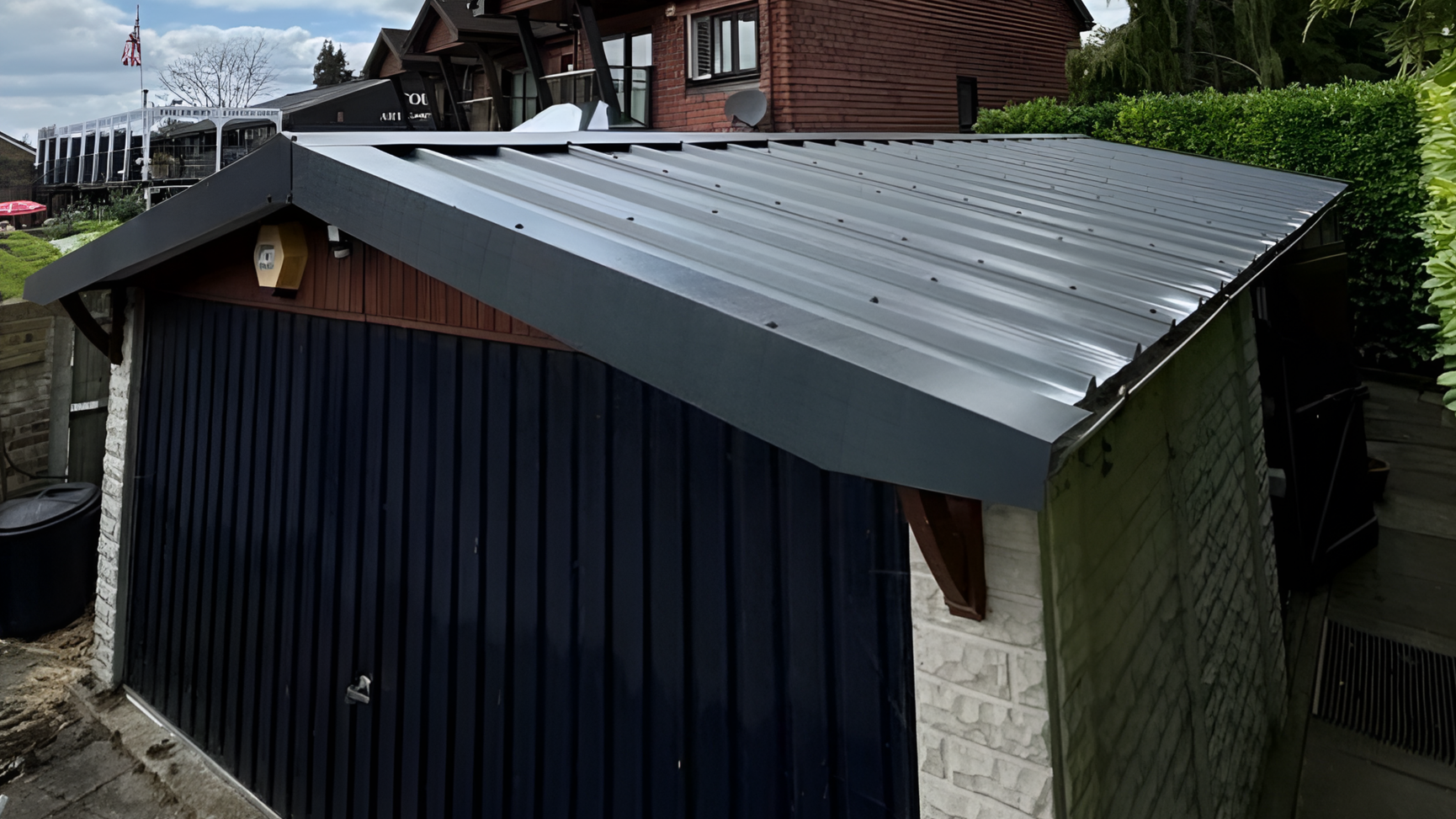

Many barns and agricultural buildings constructed or roofed before 2000 contain asbestos in corrugated roofing, wall cladding, guttering and insulation. Our team provides specialist removal across Surrey's rural and agricultural properties.
Many barns, farm buildings and rural outbuildings built or renovated before 2000 contain asbestos-containing materials (ACMs). Asbestos was used extensively in agricultural construction because it was cheap, durable, fire-resistant and easy to work with. The most common location by far is the roof — corrugated asbestos cement sheeting was the standard choice for large-span agricultural roofing throughout the second half of the twentieth century. However, it is also regularly found in wall cladding panels, soffits, guttering and downpipes, and as lagging around older boilers and pipework.
The risks increase significantly when these materials begin to deteriorate, get cracked during repairs, are broken during demolition work, or are simply disturbed without proper precautions. Requires trained specialists with proper equipment — attempting to handle asbestos-containing agricultural materials without the right training and PPE puts you, your workers and your family at serious risk. We provide a complete service from initial survey through to licensed removal and certified clearance, handling every stage so you don't have to coordinate multiple contractors.
Asbestos is not always easy to spot, and in barns and outbuildings it can be present in multiple locations simultaneously. Here are the six most common places our surveyors find asbestos-containing materials in agricultural buildings across Surrey and the Home Counties.
The most common location by far. Large-span corrugated asbestos cement sheets were the standard agricultural roofing material until the late 1990s.
Flat asbestos cement boards were commonly used on the exterior walls of agricultural buildings, either as full cladding or as infill panels between steel frame members.
Asbestos cement guttering and downpipes were widely used alongside AC roofing. These components are often overlooked but must be handled and disposed of correctly.
Asbestos-reinforced cement boards were sometimes used as floor panels or sub-floor sheeting in storage areas and working spaces within older agricultural buildings.
Older heating systems and hot water pipework in farm buildings were frequently lagged with asbestos insulation — one of the higher-risk ACM types that requires careful specialist handling.
Asbestos cement soffit boards beneath roof overhangs are common in pre-2000 agricultural and domestic outbuildings — easy to miss during visual inspections but identified quickly by our surveyors.
We have worked on farm buildings, equestrian properties and rural outbuildings across Surrey and the Home Counties. We understand the environment, the scale of agricultural projects, and the importance of working around your operations.
We understand farm environments and work flexibly around your operations — livestock, harvests and daily routines all considered. No unnecessary downtime on your property.
We always carry out a thorough ACM survey before any removal work begins. You'll know exactly what is present, where it is, how much there is and what the removal plan involves.
HSE-compliant removal procedures including wet-down suppression, full PPE, air monitoring and sealed waste handling — all carried out by trained, licensed operatives.
All waste is transported to a licensed hazardous waste facility with full consignment notes issued to you — your legal proof of compliant, traceable disposal.
"The job was completed in one day which I was chuffed with and the guys made sure that the house was safe for us to live in afterwards."
Olivia Lands — Surrey Asbestos Customer
Do old barns have asbestos?
Many outbuildings, barns and farm structures built or renovated before 2000 contain asbestos in roofing, wall cladding, guttering and pipe insulation. The likelihood is particularly high in pre-1985 structures with corrugated sheet roofing — asbestos cement was the dominant agricultural roofing material for decades. Even buildings renovated or re-roofed in the 1990s can still contain asbestos in original components that were retained.
Is asbestos in farm buildings dangerous?
Asbestos-containing materials that are intact, undamaged and undisturbed pose a lower immediate risk. However, the risk increases significantly when materials deteriorate with age, become cracked or damaged, or are disturbed during repair and renovation work. Any planned demolition or major renovation of a pre-2000 agricultural building legally requires a refurbishment or demolition survey to be carried out by a qualified surveyor before works begin. Ignoring this requirement puts people at risk and can expose you to significant legal liability.
Can asbestos be removed from a barn?
Yes — but it requires trained specialists with the correct equipment, PPE and licensing. Our team handles everything from the initial survey and sampling through to the licensed removal, air monitoring, site clearance and waste disposal. We provide all documentation including waste consignment notes and clearance certificates. Most single-barn projects can be completed within one to two working days depending on the size and the number of ACMs present.
What if I need the barn demolished?
We offer full demolition services as well as standard removal. Before any barn can be demolished, a pre-demolition refurbishment survey is legally required — this is a comprehensive inspection of all areas including those that would normally be inaccessible, to identify every ACM present before demolition begins. We carry out these surveys and then manage the complete clearance of all asbestos-containing materials ahead of the demolition work, giving you a fully compliant, documented clearance record.
We cover all Surrey, London and Home Counties agricultural properties. Same-day surveys available.